- Join Now
- Login
- Member Zone
- Your Career
- Freelancing
- International Grooms Association
- BGA Training
- Healthy Yard Healthy Horses
- Transporting horses
- Brexit
- Safe workplace
- Student Zone
- Member Discounts
- BG Magazine
- Member services
- Training & Careers
- BGA CV Creator
- Horse groom training
- Where to Train
- BGA E Learning
- Career choices
- Change to Racing
- First Aid training for grooms
- Parents
- Grooms Jobs
- Grooms Life
- About
- News
- Contact




WHY I AM A MEMBER

“The bespoke information has been invaluable for my career and employment; I don’t feel alone anymore. I have the peace of mind knowing my income is protected with my BGA insurance.”
Jenny Hooch
BGA Member
- Your Career
- Freelancing
- BGA Training
- Healthy Yard Healthy Horses
- Transporting horses
- Brexit
- Safe workplace
- Student zone
- Member Discounts
- BG Magazine
- International Grooms Association
- BGA CV Creator
- Horse groom training
- Where to Train
- BGA E Learning
- Career choices
- Change to Racing
- First Aid training for grooms
- Parents
GROOMS JOB BOARD
Stable Staff
Shropshire
Sector Racing (NH)
Search all the latest grooms jobs
WATCH OUR VIDEO
When the temperatures rise, most grooms naturally focus on keeping their horses cool, comfortable and safe. But while we're busy monitoring water intake, adjusting turnout schedules and checking for signs of heat stress in horses, it's easy to forget about our own wellbeing. Working outdoors, carrying out physically demanding tasks and spending long hours on your feet can make summer one of the most challenging times of year for grooms. Looking after yourself isn't a luxury – it's essential for your health, safety and performance at work. International dressage groom Kate shares her experiences of working through hot summers, along with practical advice to help you stay safe and comfortable. It isn't always possible to avoid working during the hottest part of the day, but where you can, try to schedule physically demanding tasks for the cooler hours of the morning or evening. Manual jobs such as mucking out, fencing repairs, arena maintenance or field work can often be completed before temperatures peak. Kate explains: "In one of my previous jobs, we started earlier in the summer to work the horses before it became too hot and then took a longer break in the middle of the day. It worked really well for both the horses and the staff." If your workplace allows flexibility, consider discussing adjusted working hours during periods of extreme heat. Unlike cold weather, there is no maximum legal workplace temperature in the UK. However, employers have a legal duty to ensure the health, safety and welfare of their employees. This means employers should: If temperatures become excessive and working conditions are affecting your health or safety, speak with your employer. Raising concerns early can help identify practical solutions before problems arise. Dress for the Conditions When temperatures soar, clothing choices can make a huge difference. If your workplace permits it, lightweight shorts and breathable tops can help you stay cooler. However, comfort should never come at the expense of safety. Always dress appropriately for the task: And remember: horses and flip-flops are never a good combination. When it's hot, it can be tempting to swap your yard boots for something lighter. However, appropriate footwear remains one of the most important pieces of personal protective equipment. Good summer yard footwear should: If your boots become uncomfortable in the heat, consider lighter-weight safety boots designed for warmer conditions. Moisture-wicking socks can also help reduce discomfort and prevent blisters. Dehydration is one of the biggest contributors to fatigue, headaches and reduced concentration during hot weather. By the time you feel thirsty, you may already be becoming dehydrated. Kate says: "I'm really bad at not drinking enough, but when I do stay hydrated I find I don't get that mid-afternoon energy crash." Simple ways to increase your fluid intake include: While tea and coffee can still be enjoyed in moderation, they shouldn't replace regular water intake. When it's hot, many people lose their appetite, but skipping meals can leave you feeling exhausted. Try to choose lighter meals and snacks that provide steady energy throughout the day: Eating little and often can help maintain energy levels without leaving you feeling sluggish. Sunburn can happen surprisingly quickly, even on cloudy days. Protect your skin by: Kate admits that uneven tan lines come with the territory: "Unfortunately bad tan lines seem to come free with every horse job!" But while tan lines may be unavoidable, sun damage isn't. Keep sunscreen in your locker, car or tack room so it's always available when you need it. Grooms are often good at spotting when a horse isn't quite right. We need to be equally aware of our own warning signs. Watch out for: If you notice these symptoms: Heat exhaustion can develop into heatstroke, which is a medical emergency. During busy periods it's tempting to push through, but short breaks can actually improve productivity and reduce mistakes. Where possible: Even short cooling breaks can make a significant difference. One of the strengths of the grooming community is teamwork. Check in with colleagues regularly during hot weather: Sometimes a bit of humour goes a long way too. Whether it's an ice cream run at lunchtime or a quick water fight after the horses are finished, small moments can help boost morale on the hottest days. Summer is one of the busiest and most rewarding times of year in the equestrian industry. While we can't always avoid working in the heat, taking sensible precautions can help protect your health and wellbeing. Remember: looking after yourself is not taking time away from your horses. A healthy, hydrated and well-rested groom is better equipped to provide excellent care. Stay safe, stay cool and enjoy the sunshine while it lasts! Before we know it, we'll all be talking about winter and complaining about our chilblains again.
Summer Survival Guide for Grooms
23rd June 2026
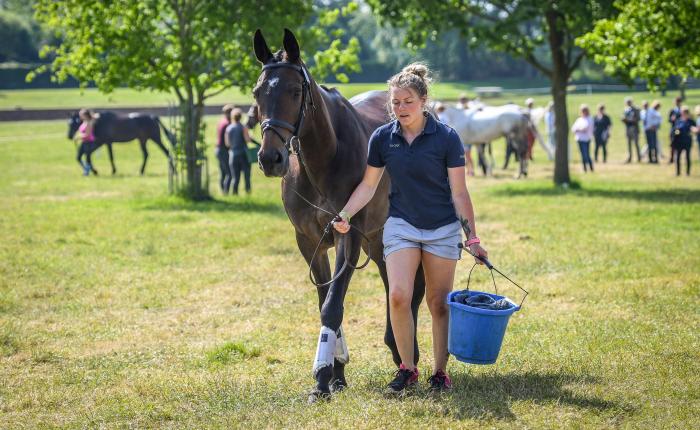
Plan Your Day Around the Heat
Know Your Rights: Working in Hot Weather
Footwear Matters
Stay Hydrated
Fuel Your Body
Protect Yourself from the Sun
Recognise the Signs of Heat Exhaustion
Take Breaks and Cool Down
Look Out for Each Other
Enjoy the Summer Safely
BLOG ARCHIVE
- 2026 (9 ENTRIES)
- 2025 (14 ENTRIES)
- 2024 (52 ENTRIES)
- 2023 (60 ENTRIES)
- 2022 (35 ENTRIES)
- 2021 (24 ENTRIES)
- 2020 (19 ENTRIES)
- 2019 (45 ENTRIES)
- 2018 (36 ENTRIES)
- 2017 (7 ENTRIES)

What the personal accident policy covers you for:
- Whilst at work
- All stable duties – mucking out, grooming, washing off, turning out
- Clipping
- Riding – including hacking and jumping
- Hunting
- Lunging
- Breaking in
- Holding horse for a vet and other procedures
- Travelling horses both in the UK and abroad
- Competing in line with your job including: jumping, dressage, eventing
- Injuries that may happen to you whilst you are teaching - but you must also be grooming as part of your duties and not be a sole instructor
What the personal accident policy doesn’t cover you for:
- Riding in a race, point to point or team chase
- Stunt Riding
- Accidents occurring whilst travelling to and from work
- Riding and competing your own horse (but you can upgrade when applying for membership to include this)
- Public Liability – this is a separate insurance policy - the Freelance Groom Liability Insurance
- Care Custody and Control – this is a separate policy - the Freelance Groom Liability Insurance
If you require_once additional cover then please contact KBIS directly.
| GROOM | RIDER | EMPLOYER | |
|
When you are working for other people you do most of the following; muck out, turn out/catch in, tack up, groom horses, exercise Horses (including hacking, jumping and schooling), in the care of your employer/client. |
|
|
|
| Predominantly ride horses for other people including schooling, exercising and competing. | NO |
YES |
YES |
| Provide grooming services for someone else either full time or on a freelance basis i.e. an employer or a client. | YES |
NO |
NO |
| Employ staff – have an employers liability policy in your name | NO | NO | YES |
| Buy and sell horses | NO | YES | YES |

The BGA is the national representative body for all
grooms working in the UK or British grooms abroad.
MEMBERS OF:



Your item has been added to the basket
You need to create an account, or login before you can add this item to your basket.